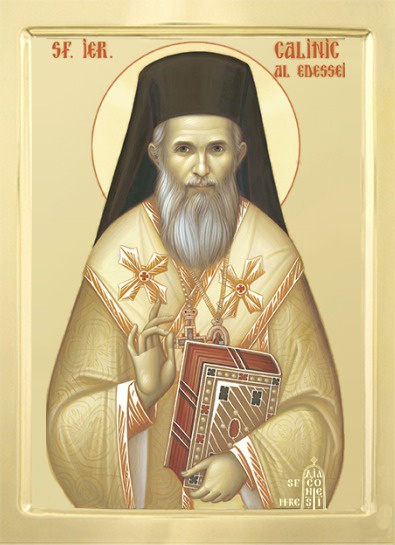
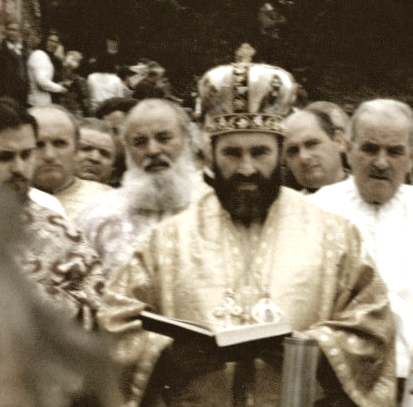
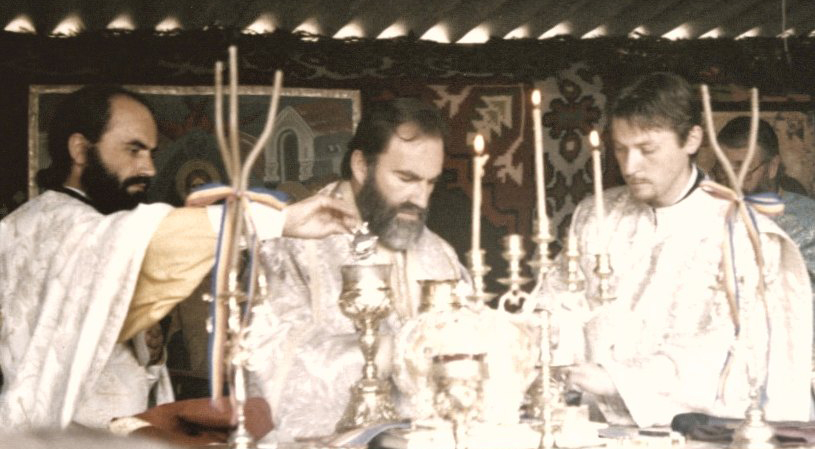
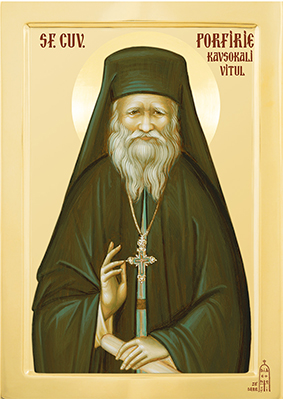
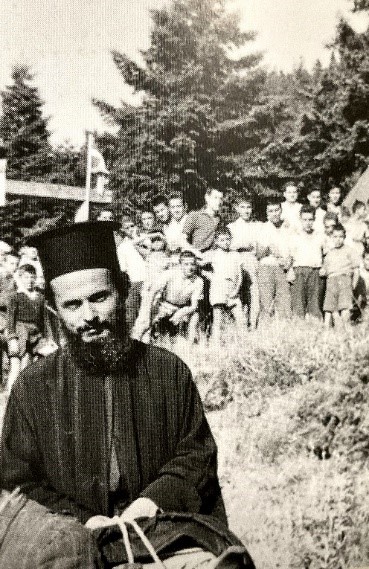
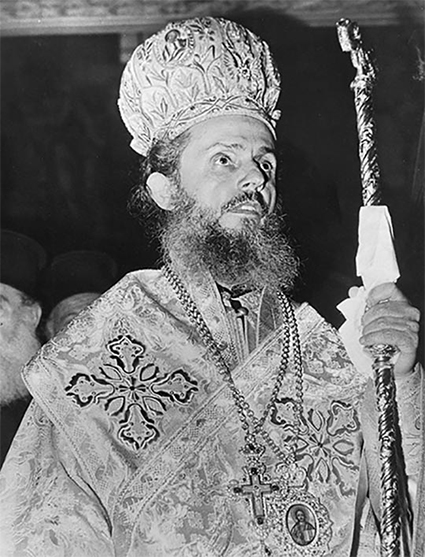
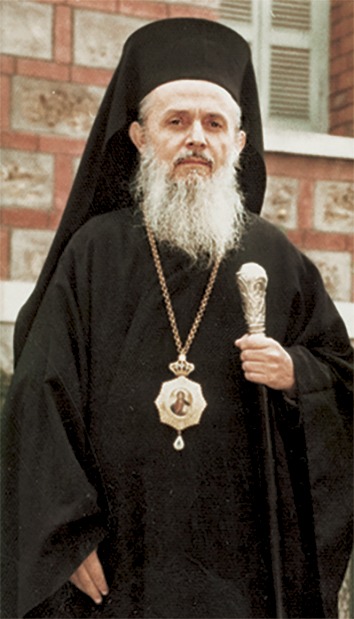
Saint Dionysios of Kolitsou
Apolytikion, Tone 5.
The Co-eternal Word...
Our father
Dionysios, the sweet-sounding lute
of the Comforter, let us honour radiantly, asking his intercession, for he ascended the ineffable height of watchfulness on Athos through ascetic struggle, by which the all-wondrous one sanctified the Kelli of Kolitsou.
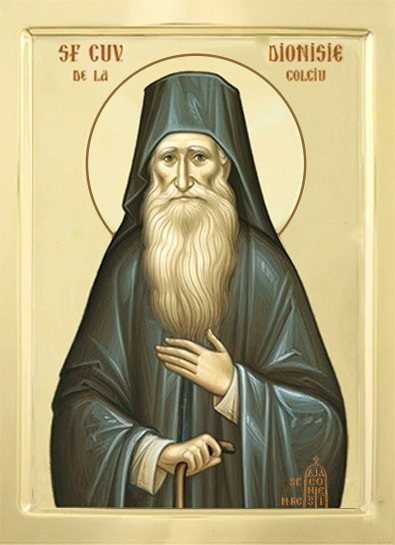
Tone 4.
You Who were lifted up on the Cross...
You who beheld what is in the soul through the divine grace
dwelling within you,
O Father Dionysios, most wise guide of all who hasten to you, guide us and lead us by the hand, that we may walk the saving path of repentance, O Spirit-bearer.
***
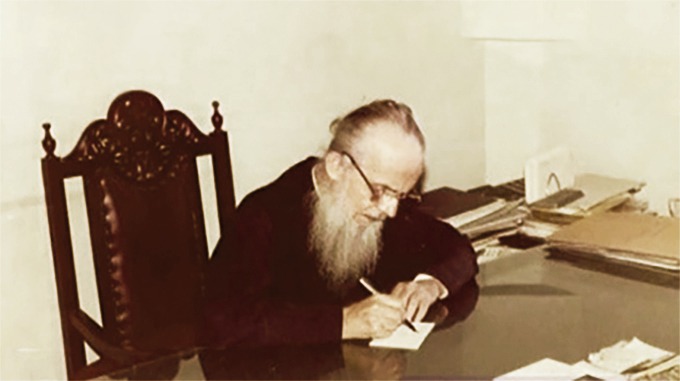
Saint Dionysios of Kolitsou was born on 22 September 1909 in Vorniceni, Botoșani, in the blessed land of Romania, into a family of pious peasants, receiving at baptism the name Dumitru. His parents, Ion Vasile and Casandra Ignat, had eight children, four of whom passed to eternal life at a tender age.
Early on, when he was two years old, he lost his father, coming under the care of his mother and his elder brother, Gheorghe, who chose the monastic path, entering the Măgura Skete in Bacău. Feeling the call to the monastic life, Dumitru decided at the age of 14 to follow his brother, going to the same skete where Gheorghe had already received the angelic schema, with the name Gymnasios.
Emulating the fathers of old, Father Gymnasios and Brother Dumitru decided to leave their homeland, seeking a harsher place of ascetic struggle, and so they set out for the homeland of monks, the Holy Mountain Athos. In this place protected by the Most Holy Theotokos, Saint Dionysios struggled steadfastly for 78 years. At first he settled at the Kelli of the Holy Veil in Kapsala, but shortly afterwards he was sent by his brother to the Kelli of the Entry of the Mother of God into the Temple near Karyes, to spend a few months in obedience to an unknown father and so to accustom himself to estrangement from the world.
In 1927 the Kelli of the Annunciation, belonging to Pantokratoros Monastery, was put up for sale by some Romanian fathers who wished to return to their country. Taking as their elder Father Sebastian Burnichi, a monk adorned with virtue, the two brothers bought the kelli with great effort, so that they could settle on the Holy Mountain. To pay off the debts, Brother Dumitru and Father Gymnasios laboured for three years as hired hands at Iviron Monastery. While they lived at the Kelli of the Annunciation, they underwent many terrifying temptations and demonic apparitions, but despite all the hardships they had, being often exhausted after a day’s work, they never neglected the services in church and their rule of prayer in the cell, the two wings of the monk, and they always entrusted themselves to God’s providence. In this hard period, Saint Dionysios had as his confessor, guide and helper Saint Antipas Dinescu, a strict ascetic, former abbot of Prodromou Skete, who now lived in a hermit’s cell not far from Stavronikita Monastery. Also in this period, Saint Dionysios perfected himself in the mysteries of Byzantine chant, learning church singing as a spiritual craft from the monk Iakovos Deciu, a disciple of Saint Nektarios the Protopsaltis.
On the feast of Saint Nicholas in 1927, Brother Dumitru was tonsured a monk, receiving the name Dionysios, and on 2 January 1931 Saint Dionysios was ordained hierodeacon for the Kelli of the Annunciation. In 1932, after the repose of their first elder, the monk Sebastian, Saint Dionysios, together with his brother Gymnasios, came under the obedience of another virtuous ascetic, the monk Gideon Chelaru, elder of the Kelli of Saint Tikhon of Zadonsk, also in Kapsala, on the lands of Pantokratoros Monastery. The monk Gideon took the two brothers into his brotherhood on the advice of Saint Antipas Dinescu, who knew them well, knowing both their worthiness and the poverty in which they lived. On 13 August 1937, Saint Dionysios was ordained hieromonk, serving with great zeal before the Holy Altar.
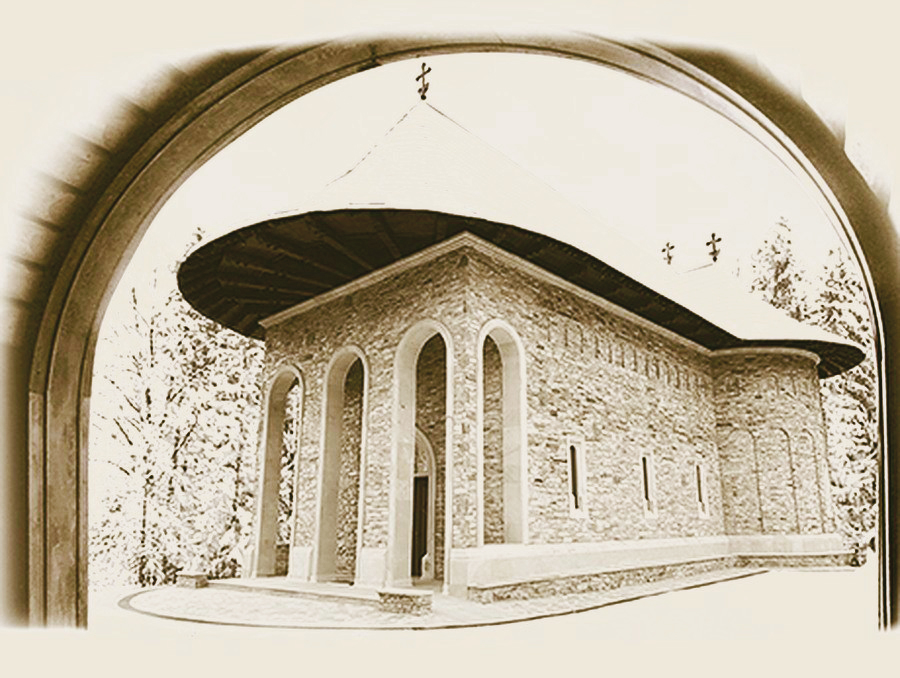
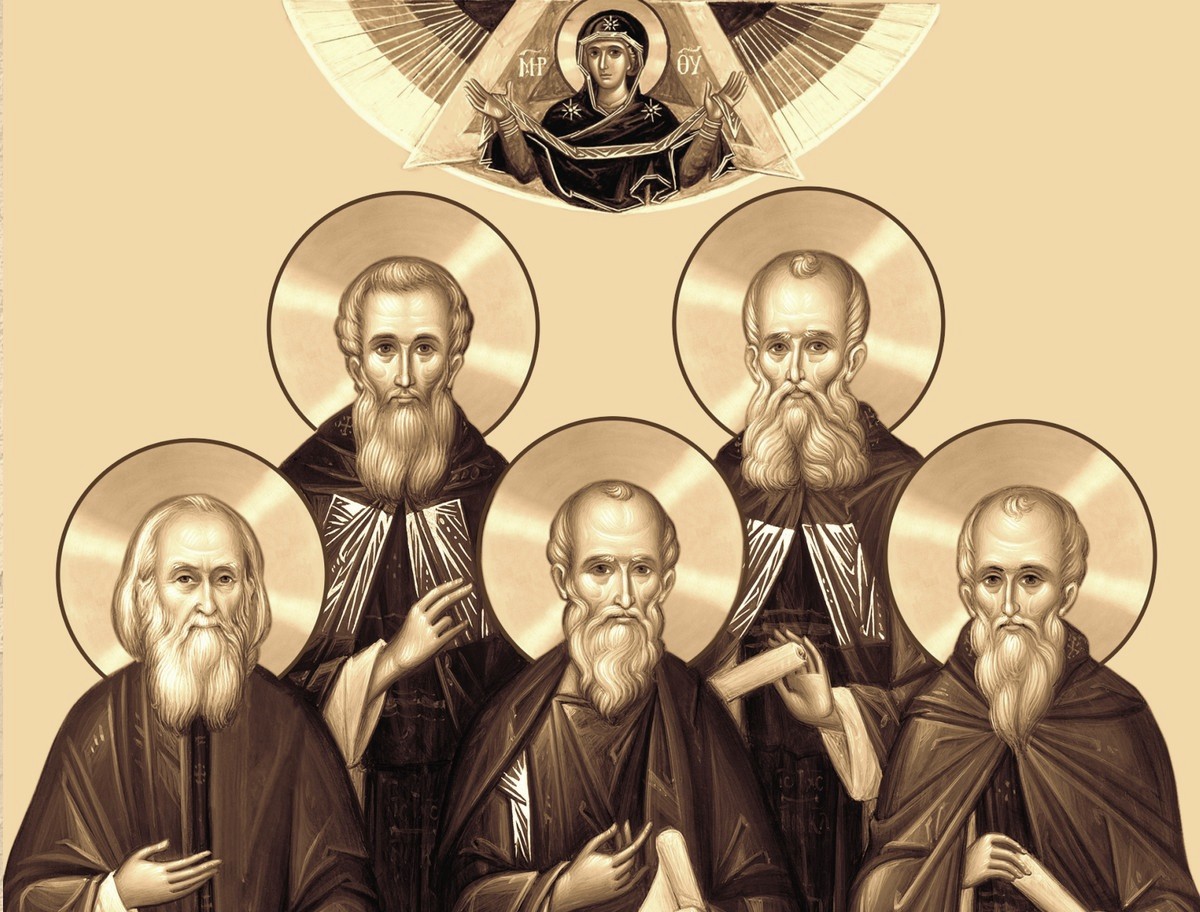
Shortly afterwards, the brotherhood of Saint Tikhon also bought the Kelli of Saint George at Kolitsou, on the lands of Vatopedi Monastery, wishing to form a larger brotherhood. In 1945 Saint Dionysios was made a confessor, becoming an unerring guide of many souls to salvation. Two years later, he was tonsured into the great schema. The service was performed by the great ascetic Saint John Guțu of the neighbouring kelli at Kolitsou, dedicated to the Nativity of Saint John the Baptist, with his brother, Saint Gymnasios the Hieroschemamonk, as his sponsor at tonsure.
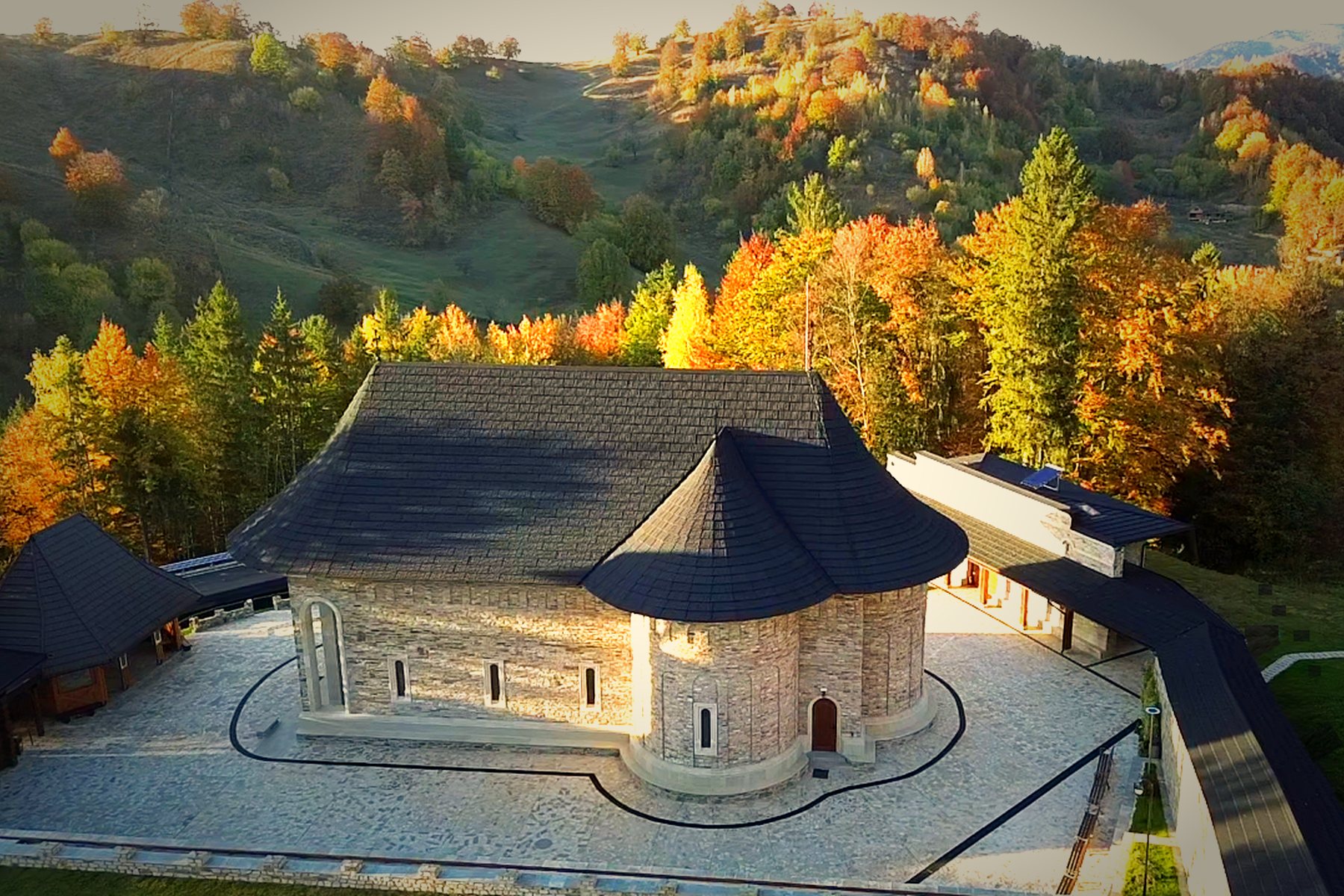
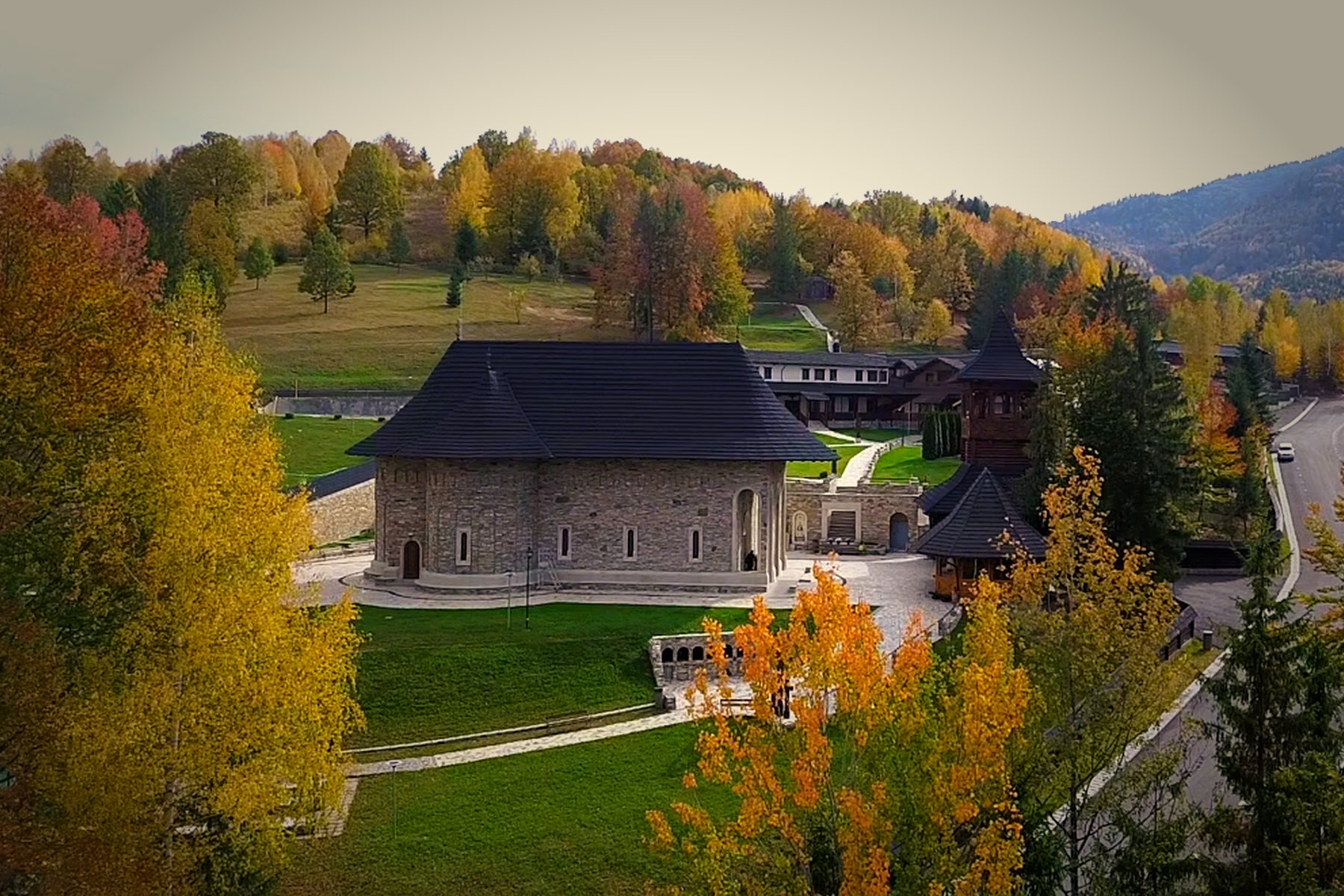
In 1979 Saint Dionysios became elder of the Kelli of Saint George – Kolitsou, remaining in this obedience until his passing to eternal life in 2004.
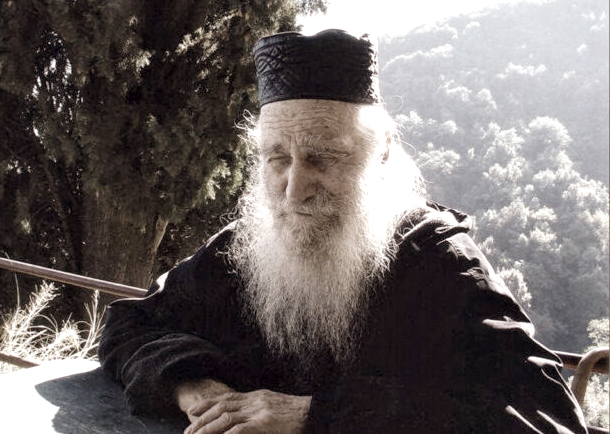
Saint Dionysios had perfect humility and overwhelming love; therefore he was honoured by all the dwellers of the Holy Mountain and by multitudes of believers: abbots, learned theologians, simple monks, pilgrims, even officials and notable people, leaders of nations – all found a profitable word when they came to the holy confessor of the Kolitsou wilderness. His simple teaching, full of love and humility, pierced even the most hardened heart. As elder of the kelli, he never rebuked anyone openly. He always sought to explain gently to the one who had erred, without blaming him. He endured many humiliations from some monks, but he never judged them; he always humbled himself and sought to find justifications for their behaviour.
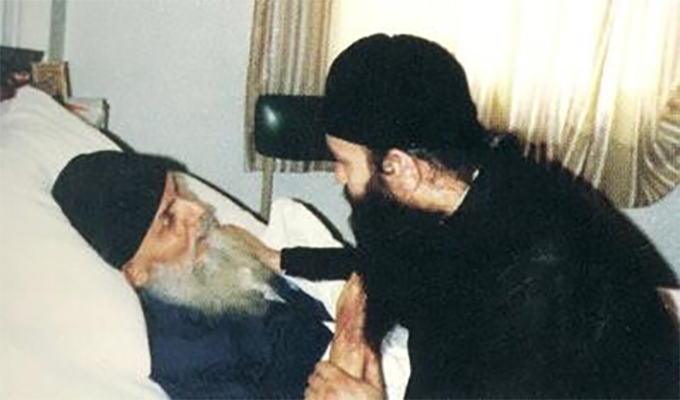
Ten years before his departure to the Lord, the Saint lost his bodily sight. In his humility, he embraced the suffering, placing himself entirely in God’s care. He was a perfect ascetic. He slept two or three hours a night and rose to pray. He rested another hour or two at midday. At night he often woke earlier, for fear of sleeping too long and having no more time for prayer. He always did his rule of prayer behind the door of his cell. When his disciples came in to see whether he needed anything, the Saint immediately hid it, sitting down on the bed as if he had been resting. He wanted his ascetic struggle to be known to God alone. He placed great emphasis on taking part in the services of the Church. He had much zeal and patience. He stood in his stall and bravely endured the infirmities of old age. Sometimes he groaned because of the pains he had. His whole body ached terribly, yet he could not live without the services in church and his rule of prayer in the cell. The holy life of Saint Dionysios and his spiritual struggles caused the powers of darkness to wage war on him many times, unable to bear his God-pleasing deeds and his strict, truly angelic way of life. He ended this life on 11 May 2004, surrounded by his disciples.
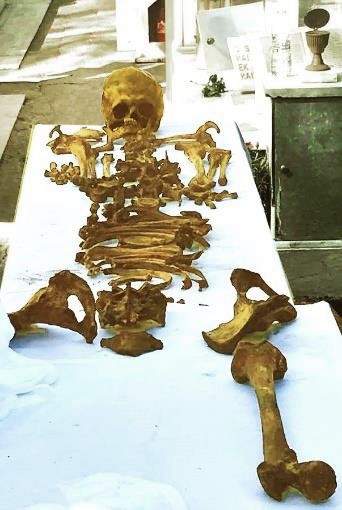
Shining in virtue, in love and humility, he became a vessel receptive of divine gifts, of discernment and foresight, and showed himself a wise guide of souls. After his repose, the body of Saint Dionysios gave off a sweet spiritual fragrance, as had often happened during his life too, God thereby showing once again the one who was pleasing before Him.
The Menaion of the Romanian Saints, Volume IV,
Publishing House of the Biblical and Orthodox Mission Institute
***
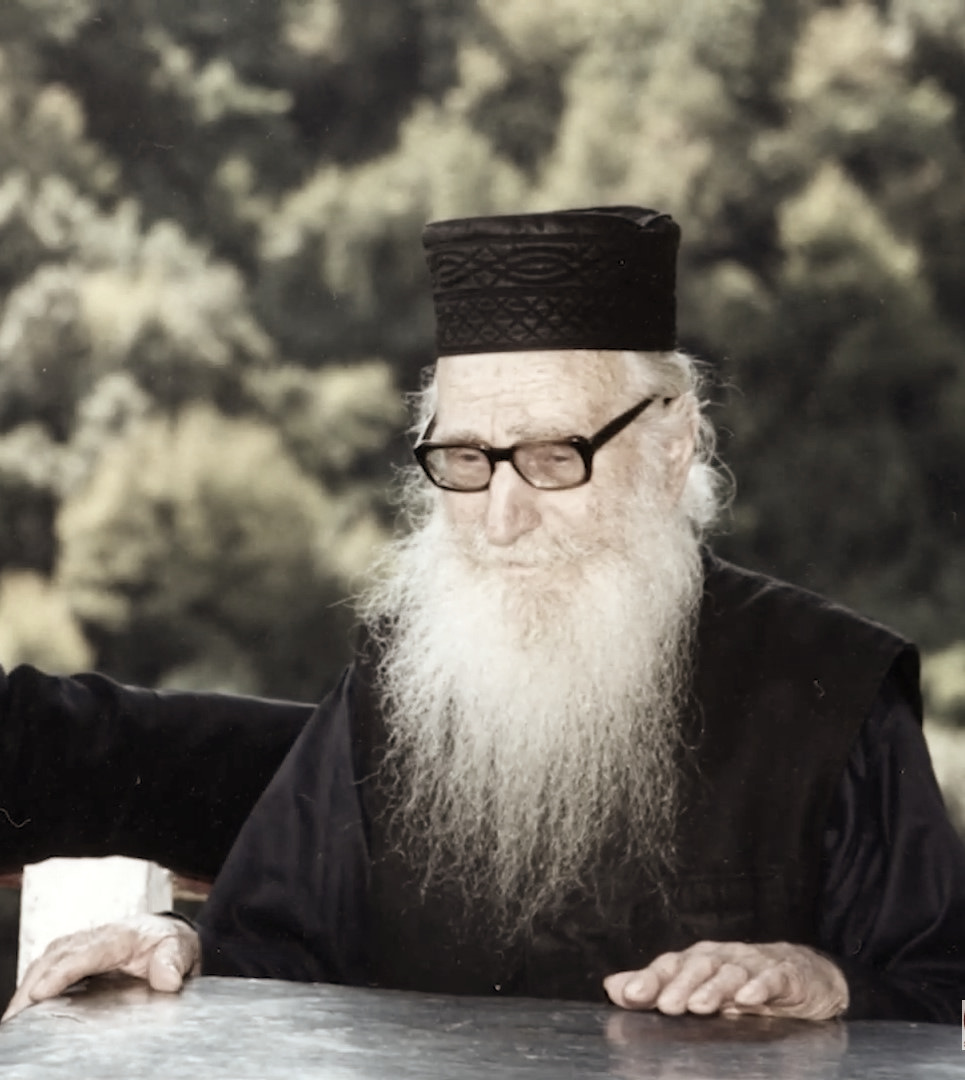
Testimonies
The gift of clairvoyance
For his great humility and love for people, God endowed Father Dionysios with spiritual gifts. One of them was clairvoyance, that is, the ability to see the hidden things in people’s souls and lives.
Once, a Greek from Thessaloniki, Chrysostomos, came to confess. He told Father Dionysios that he had a possessed daughter and that she was suffering this as a punishment for his sins. But he did not say what these sins were. Yet the Father knew:
– You should have had four children, but two you did away with; that is why God allowed this illness to your daughter.
Chrysostomos was dumbfounded. No one but he and his wife knew of those sins. How did this confessor from the wilderness of Kolitsou know them?
With his usual delicacy, so as not to wound or discourage any soul, the Father comforted him, telling him that God would accept his repentance, because when he had committed those sins he had not known how grave they were. He advised him to be patient, gave him a canon of repentance and assured him that his daughter would get better.
Chrysostomos went home as if flying. Father Dionysios had lifted from his soul the burden of the two grave sins which he had never dared to confess.
*
Another time, a group of Romanian pilgrims came to the Kolitsou Skete. Father Dionysios did not know them, nor could he see them, for he was already blind. Nevertheless, he went up to one of them, took him lovingly by the hand and said to him:
– Ion, you have a wife and two boys, but you live without being married in church.
Ion was left speechless with amazement: “How does this blind old man know my life?”
– Get married in church, Ion, so that the blessing of God may come upon you!
When he returned home to Romania, he told his wife what had happened.
– Let’s get married in church, that’s how it should be!
– Don’t be silly, husband! People will laugh at us! Am I to become a bride now, when we have two grown-up children?!
After a while, Ion went to Kolitsou again, but Father Dionysios had died, so he knelt at his grave and prayed:
– Father, forgive me! My wife just won’t get married in church. Do something!
On his return, his wife was waiting for him:
– Ion, you know, you are right! Let’s get married in church!
They were married in church, their children were married in church, and they also sponsored the weddings of several dozen families. And truly the blessing of God came down upon them, for the grandchildren they had awaited for so long came into the world. The clairvoyance and the prayer of Saint Dionysios changed the life of a whole community.
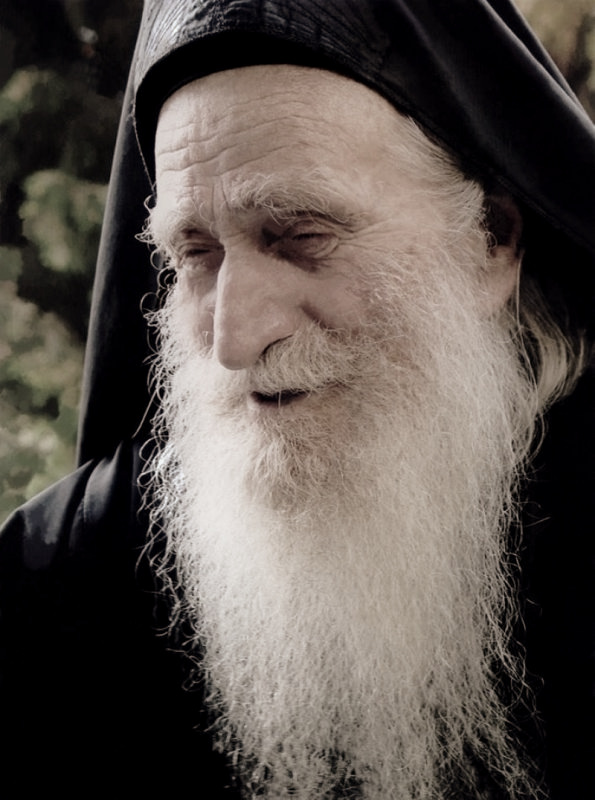
The gift of foresight
Another gift of Father Dionysios was foresight: God revealed to him beforehand what was going to happen.
Once, a believer from Cyprus had a gravely ill little girl in a coma. He telephoned Father Dionysios at Kolitsou and asked him to pray. After listening to him, the Father answered:
– Your daughter will die. I have received this announcement from the Holy Spirit to tell you.
Indeed, after a few days the child died. After the burial, her father came to the Holy Mountain to thank Father Dionysios. His word, however painful it had been for the family, had comforted them with the assurance that this was the will of God, and if He had decided to take their little girl, then surely He had prepared something better for her there. In this way they had managed to accept the child’s death with greater peace.
*
Another time, the fathers of Kolitsou were waiting to receive from Athens some booklets with the Paraclesis of Saint George, the protector of their Kelli. The Greek publishers phoned to say that they would bring them on Lazarus Saturday.
On Friday, the disciples went to give the good news to Elder Dionysios:
– Tomorrow, at last, the Paraclesis booklets of Saint George are arriving!
– Why tomorrow? Today!
– No, Father, tomorrow, that’s what they said!
– Are you sure it’s not today?
– No, tomorrow, on Lazarus Saturday, that’s what was agreed!
– Well, as they wish! the Father gave in.
The conversation was not yet over when someone announced that a car loaded with booklets had arrived in the courtyard.
Under the umbrella of prayer
Father Dionysios had a very pious spiritual son, a Greek teacher who came from time to time to the Holy Mountain and went to him to confess.
Once, this teacher arrived, as usual, at Vatopedi Monastery, intending to set out from there to the Kelli of Saint George, to Father Dionysios. All the time he stayed at Vatopedi it rained torrentially, and he found nothing to take him to Kolitsou.
In the end, still standing at the monastery gate, he said to himself: “I absolutely must go. I’ll set off on foot! With the prayers of Father Dionysios, all will be well. What worse can happen than that I get soaked to the skin?”
And he set off on foot. He did not even have an umbrella, and the rain kept pouring down. He made his way to Kolitsou with some difficulty. When he arrived, he realized that all the clothes he had on were dry and there was not a speck of mud on his shoes, although the road had been muddy.
Astonished, he went straight to Father Dionysios:
– Father, thank you for praying! Look, although it is pouring with rain, I didn’t get wet at all...
– Never mind, never mind! the Father interrupted him. God protected you for your love, because you had the zeal to come in such weather. Not because of me, for I am a worthless one!
And he quickly changed the subject, lest word should get around that he commanded the rain whom to wet and whom not.
The Consoler of Souls,
Saint Dionysios of Kolitsou,
Bonifaciu Publishing House